Lean HR: Creating a Culture of Trust

-- viewing now

The Lean HR: Creating a Culture of Trust certificate course is a vital program for HR professionals seeking to streamline processes and foster trust within their organizations. With a focus on lean methodologies, this course teaches learners how to eliminate waste, reduce costs, and increase efficiency in HR functions.

5.0
Based on 3,369 reviews

5,619+

Students enrolled

GBP £ 140

GBP £ 202

Save 44% with our special offer

Start Now

About this course

In today's business landscape, there is a high industry demand for HR professionals who can implement lean principles to improve organizational performance. By completing this course, learners will gain essential skills for career advancement, including problem-solving, data analysis, and strategic planning. Through interactive exercises and real-world examples, this course equips learners with the tools and techniques needed to create a culture of trust and continuous improvement within their organizations. By the end of the course, learners will have a deep understanding of lean HR principles and the ability to apply them in practical situations, making them invaluable assets to any forward-thinking organization.

100% online

Learn from anywhere

Shareable certificate

Add to your LinkedIn profile

2 months to complete

at 2-3 hours a week

Start anytime

No waiting period

Course details

Unit 1: Introduction to Lean HR: Understanding the principles and benefits of Lean HR, its impact on organizational culture, and the role of trust in Lean HR practices. • Unit 2: Building Trust in HR: Exploring the importance of trust in HR, techniques for building trust with employees, and strategies for maintaining a high level of trust. • Unit 3: Communication in Lean HR: Examining effective communication strategies, the role of active listening, and the importance of transparency in building trust. • Unit 4: Employee Engagement and Trust: Investigating the relationship between employee engagement and trust, and strategies for increasing engagement and trust in the workplace. • Unit 5: Trust and Performance Management: Understanding the role of trust in performance management, and techniques for building trust through fair and consistent performance management practices. • Unit 6: Trust and Conflict Resolution: Examining the role of trust in conflict resolution, and strategies for building trust and resolving conflicts in the workplace. • Unit 7: Data-Driven HR and Trust: Exploring the relationship between data-driven HR practices and trust, and strategies for building trust through data-driven decision making. • Unit 8: Trust and Change Management: Investigating the role of trust in change management, and strategies for building trust and managing change effectively. • Unit 9: Trust and Employee Well-being: Examining the relationship between trust and employee well-being, and strategies for building trust and promoting employee well-being in the workplace. • Unit 10: Building a Culture of Trust in HR: Developing a comprehensive approach to building a culture of trust in HR, and strategies for sustaining and reinforcing a culture of trust over time.

Career path

The HR landscape is rapidly changing, with organizations prioritizing a lean approach to HR and focusing on building a culture of trust. To excel in this new environment, HR professionals must stay informed about job market trends, salary ranges, and skill demand. In this 3D pie chart, we'll explore some of the key roles in Lean HR, each with its unique set of responsibilities and importance in today's industry. 1. HR Data Analyst: In the age of data-driven decision-making, HR Data Analysts are indispensable. They provide insights and analytics on various HR metrics to support informed decision-making in talent management, employee engagement, and organizational performance. 2. Learning & Development Specialist: As organizations emphasize continuous learning, Learning & Development Specialists help employees improve their skills and knowledge. They design, implement, and evaluate training programs that align with the company's goals and strategies. 3. Employee Relations Manager: Maintaining positive relationships between employees and management is crucial for building a trust-based culture. Employee Relations Managers handle employee concerns, investigate workplace issues, and facilitate resolutions to ensure a harmonious work environment. 4. Compensation & Benefits Analyst: Attracting and retaining top talent requires competitive salary and benefits packages. Compensation & Benefits Analysts research market trends, analyze internal data, and recommend adjustments to align with industry standards and organizational objectives. 5. Organizational Development Consultant: To thrive in a lean HR environment, organizations need effective change management strategies. Organizational Development Consultants assess the company's needs, develop improvement initiatives, and facilitate the implementation of changes to enhance overall performance. 6. Diversity & Inclusion Manager: A diverse and inclusive workforce fosters innovation, creativity, and better decision-making. Diversity & Inclusion Managers promote diversity and inclusion by implementing policies, programs, and initiatives that ensure equal opportunities for all employees. By understanding these roles and their significance, HR professionals can better navigate the lean HR landscape and contribute to building a culture of trust in their organizations.

Entry requirements

  • Basic understanding of the subject matter
  • Proficiency in English language
  • Computer and internet access
  • Basic computer skills
  • Dedication to complete the course

No prior formal qualifications required. Course designed for accessibility.

Course status

This course provides practical knowledge and skills for professional development. It is:

  • Not accredited by a recognized body
  • Not regulated by an authorized institution
  • Complementary to formal qualifications

You'll receive a certificate of completion upon successfully finishing the course.

Why people choose us for their career

Loading reviews...

Frequently Asked Questions

What makes this course unique compared to others?

How long does it take to complete the course?

What support will I receive during the course?

Is the certificate recognized internationally?

What career opportunities will this course open up?

When can I start the course?

What is the course format and learning approach?

Course fee

MOST POPULAR
Fast Track GBP £140
Complete in 1 month
Accelerated Learning Path
  • 3-4 hours per week
  • Early certificate delivery
  • Open enrollment - start anytime
Start Now
Standard Mode GBP £90
Complete in 2 months
Flexible Learning Pace
  • 2-3 hours per week
  • Regular certificate delivery
  • Open enrollment - start anytime
Start Now
What's included in both plans:
  • Full course access
  • Digital certificate
  • Course materials
All-Inclusive Pricing • No hidden fees or additional costs

Get course information

We'll send you detailed course information

Pay as a company

Request an invoice for your company to pay for this course.

Pay by Invoice

Earn a career certificate

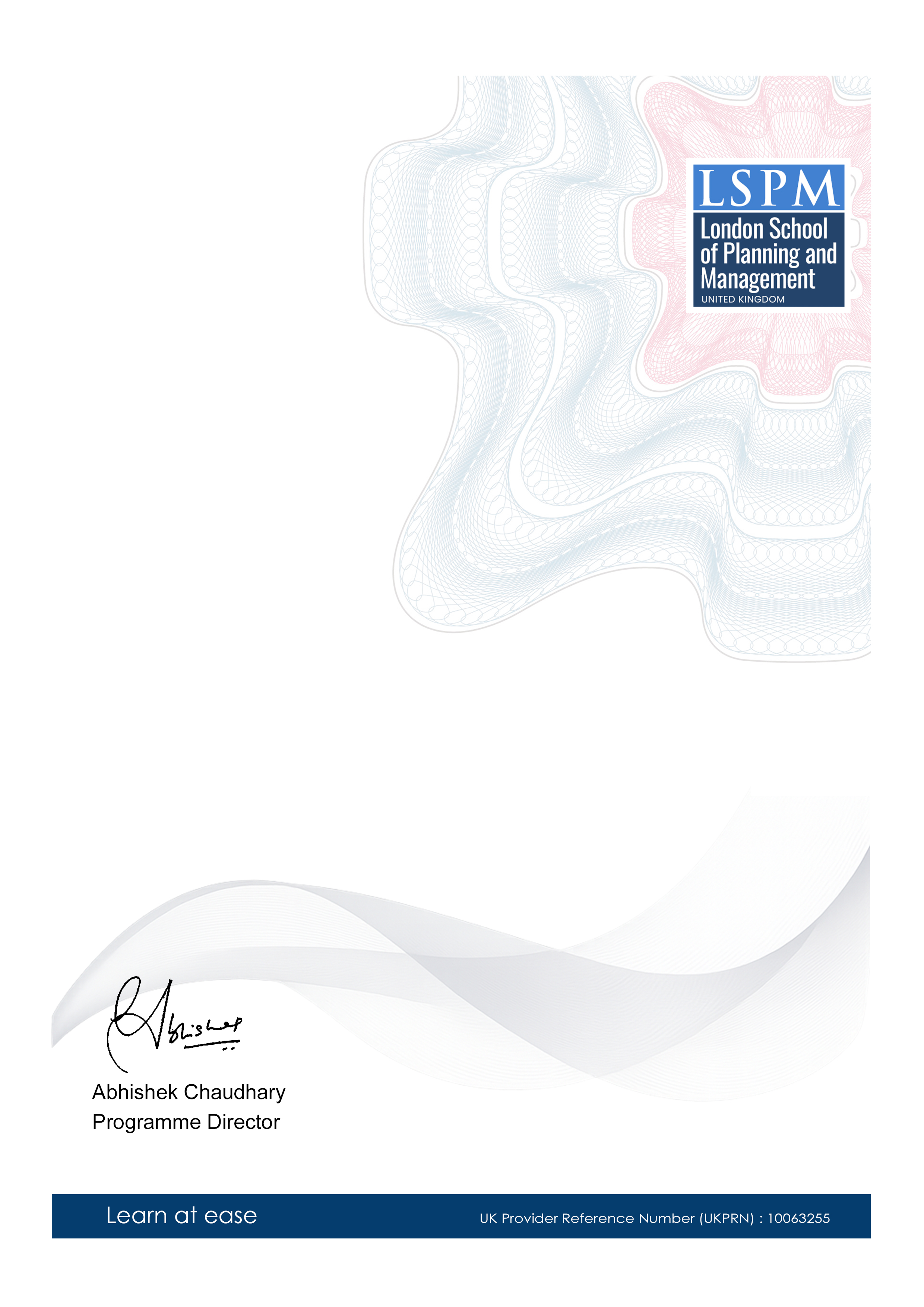
Sample Certificate Background
LEAN HR: CREATING A CULTURE OF TRUST
is awarded to
Learner Name
who has completed a programme at
London School of Planning and Management (LSPM)
Awarded on
05 May 2025
Blockchain Id: s-1-a-2-m-3-p-4-l-5-e
Add this credential to your LinkedIn profile, resume, or CV. Share it on social media and in your performance review.
SSB Logo

4.8
New Enrollment